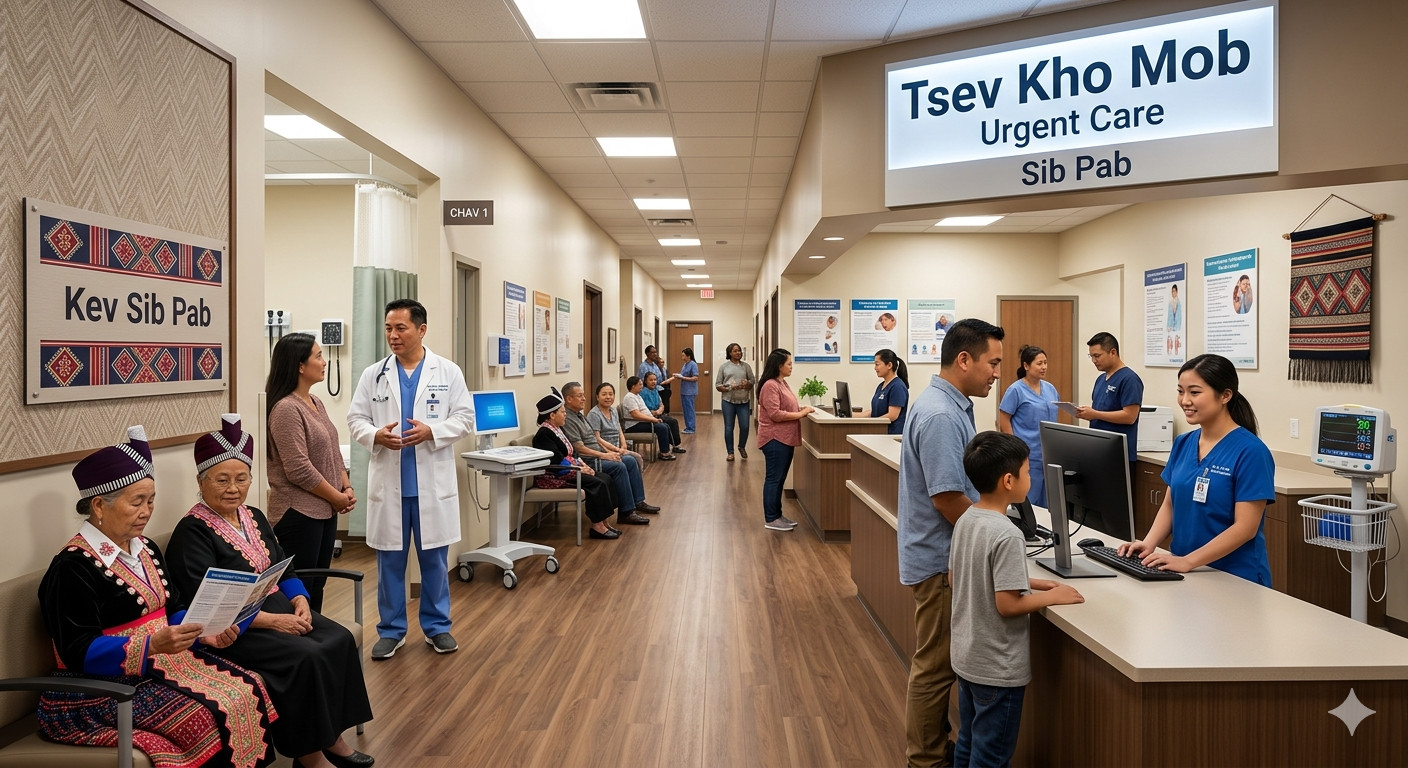

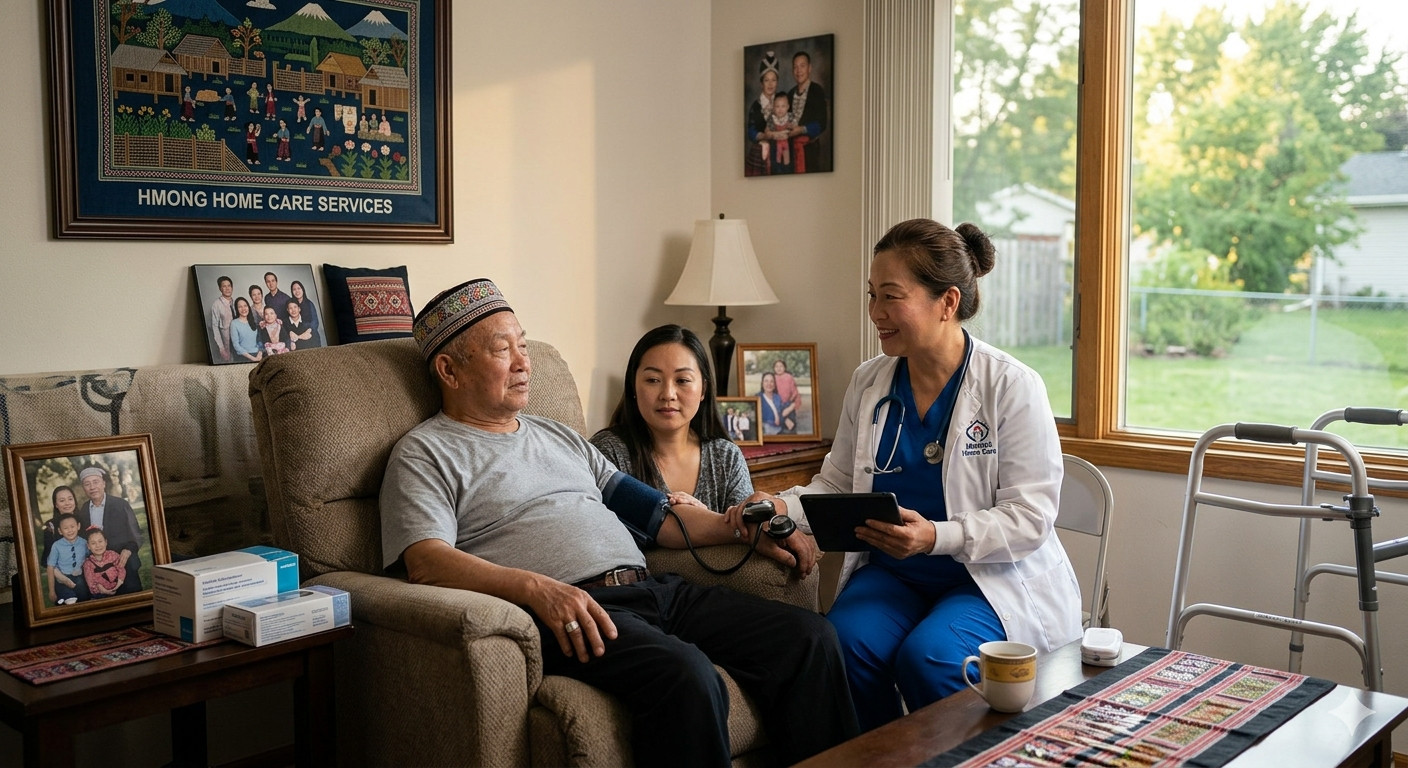







Hmong Home Health Care
High blood pressure (hypertension) is a condition where the force of blood pushing against artery walls stays too high, typically 130/80 mm Hg or higher. It often causes no symptoms, yet it silently damages the heart, brain, kidneys, eyes, and blood vessels, increasing the risk of heart attack, stroke, and kidney failure.
How High Blood Pressure Affects the Hmong Community in the U.S.
- Higher rates of uncontrolled hypertension: Hmong men have the highest rate of uncontrolled high blood pressure (33.6%) among racial groups in a large Minnesota study. Hmong women also have high rates (28.5%).
- Stroke risk: Studies show Hmong patients experience more small?vessel strokes, strongly linked to long?term uncontrolled hypertension.
- Barriers to care: Many Hmong adults struggle with medication adherence, limited English proficiency, and gaps in understanding hypertension. Over 50% report nonadherence, even though most have insurance.
- Younger adults affected: Uncontrolled hypertension is highest among Hmong adults aged 18–29, indicating early onset and long-term risk.
- High?sodium foods — fish sauce, soy sauce, bouillon cubes, dried meats
- Sodium causes the body to retain water, increasing blood volume.
- Higher blood volume means the heart must pump harder, raising blood pressure.
- Many Hmong meals use multiple salty seasonings in one dish, multiplying the effect.
- Fatty pork dishes — pork belly, sausage, fried pork